On his 99th birthday, legendary naturalist Sir David Attenborough returns with “Ocean with David Attenborough,” a powerful new documentary that explores the wonders of the sea — and the urgent threats it faces.
Crashing waves, glistening sea spray, a calm expanse of deep blue. These are the images that open “Ocean with David Attenborough,” the veteran broadcaster’s latest film. After decades of sharing stories of life on our planet, he tells viewers that: “The most important place on Earth is not on land but at sea.”
The film — released in cinemas today and available to stream globally on Disney+ and Hulu in June — coincides with Attenborough’s 99th birthday, and describes how the ocean has changed during his lifetime.
“Over the last hundred years, scientists and explorers have revealed remarkable new species, epic migrations and dazzling, complex ecosystems beyond anything I could have imagined as a young man,” he says in a press release. “In this film, we share those wonderful discoveries, uncover why our ocean is in such poor health, and, perhaps most importantly, show how it can be restored to health.”
The feature-length documentary takes viewers on a journey to coral reefs, kelp forests and towering seamounts, showcasing the wonders of the underwater world and the vital role the ocean plays in defending Earth against climate catastrophe as its largest carbon sink.
But the ocean also faces terrible threats. The film was shot as the planet experienced an extreme marine heatwave and shows the effects of the resulting mass coral bleaching: expansive graveyards of bright white coral, devoid of sea life.
Extraordinary footage shot off the coast of Britain and in the Mediterranean Sea shows the scale of destruction from industrial fishing. Bottom trawlers are filmed towing nets with a heavy chain along the seafloor, indiscriminately catching creatures in their path and churning up dense clouds of carbon-rich sediment.
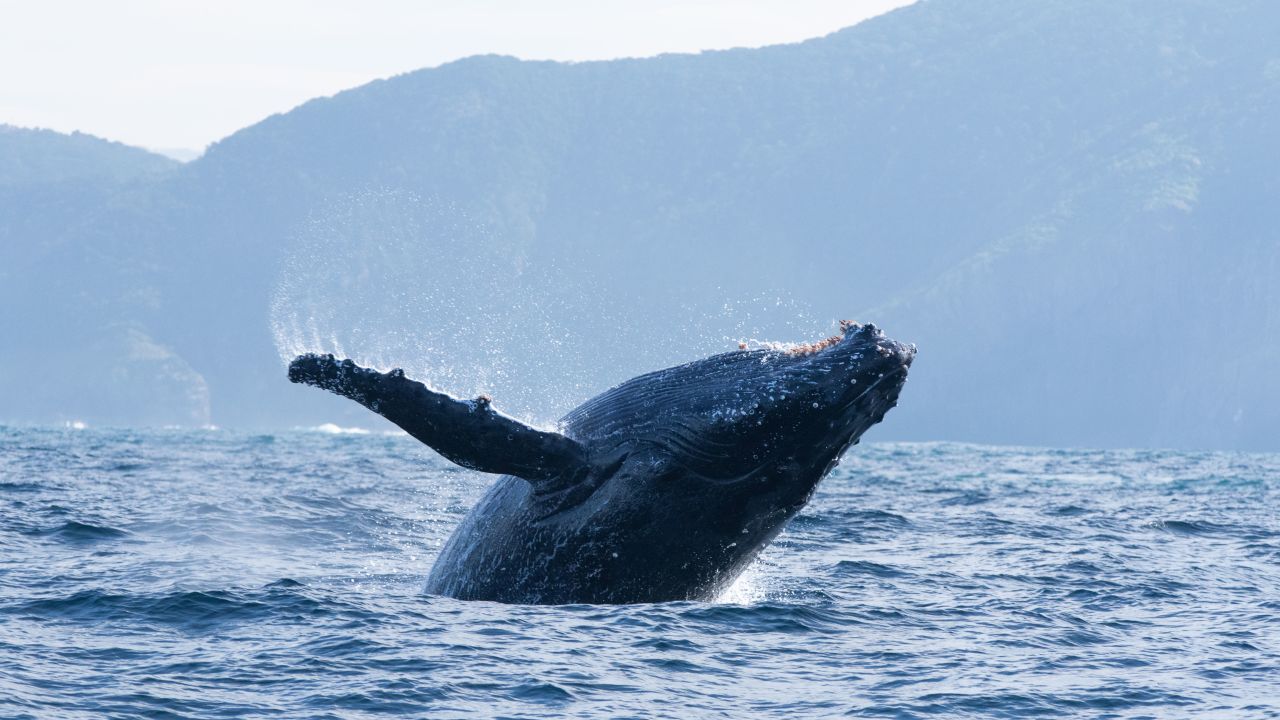
Many whale populations, including the humpback, have bounced back since a commercial ban on whaling.
“The trails of destruction can be seen from space,” Attenborough narrates, adding that not only does the process release vast amounts of carbon dioxide, the majority of the catch is discarded, since the fishers are usually only targeting one species. “It is hard to imagine a more wasteful way to catch fish,” he says.
These ocean explorers have seen the damage done by industrial fishing. They want it to stop
The practice is not only devastating entire marine ecosystems but coastal communities that depend on fish for their livelihoods. Industrial fishing vessels — what Attenborough calls “vast factories at sea” — hoover up everything and leave little behind for locals. It is a form of “modern day colonialism,” he says, and has even reached the depths of Antarctica.
‘A moment of change’
Yet, despite all this, Attenborough has hope. He points to the ocean’s amazing ability to recover when it is given space to do so. In the Pacific Ocean nations of Kiribati and Palau, and the Indonesian province of West Papua, coral reefs that have suffered mass bleaching events are alive once more, and areas where fishing has been banned, such as small marine reserves in the Mediterranean, have bounced back to life. The film highlights Papahānaumokuākea, the world’s largest no-fishing zone, off the coast of Hawaii, where native fishers are reporting bountiful fish stocks, as populations recover and spill over into neighboring waters, and where seabird populations like the albatross have thrived as a result of the restrictions.
Enric Sala, founder of National Geographic’s Pristine Seas program and scientific advisor to the film, has seen the ocean’s remarkable recovery firsthand, diving in the Southern Line Islands, where half of the corals died after marine heat waves a decade ago. “After four years, they had fully recovered, because the fish were there and the fish helped to clean the reef so the corals could come back.”
Sala shares Attenborough’s optimism that the ocean could be saved if we act now. There are three main threats, he says: global warming, plastic pollution and overfishing. The latter is the easiest to fix: “If we stopped fishing in one place today, less fish will die; the system will start to recover the day after.”
The film’s overriding message is not that all fishing is bad, but that priority areas must be fully protected with clear no-take zones. Less than 3% of the ocean is fully protected, according to the Marine Conservation Institute— this needs to increase, says Attenborough.
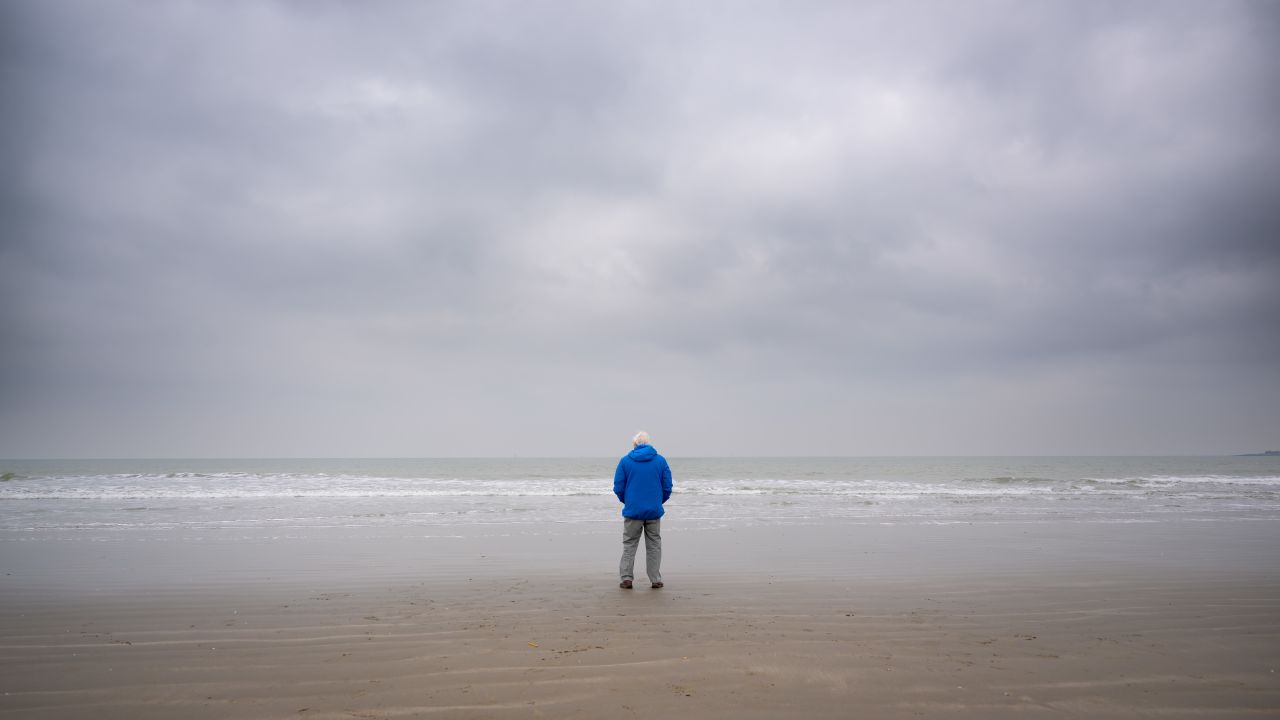
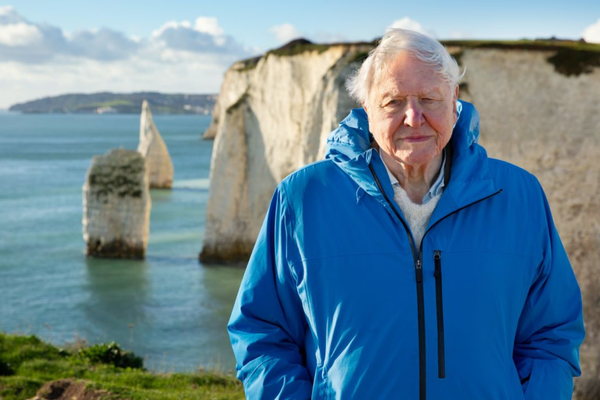
David Attenborough looks out to sea in Southern England. The film is released in cinemas on his 99th birthday.
“Success is possible,” he adds, as he reminds viewers that action like this has happened on a global scale before. Whales were hunted to the brink of extinction, but a ban on commercial whaling in 1986 has seen many populations make a comeback.
Sala believes that Attenborough’s movie could help turn the tide: “(The message that) we are draining life out of the ocean, but if we protect at least a third, we can bring it back to life: I have been saying it for years, scientists have been saying it for years, but now that he says it, people are going to listen.”
The tide is turning on shark nets at Sydney’s famed beaches
What’s more, the shocking images from the film illustrate the damage industrial fishing can do to the ocean. “This has been out of sight, out of mind for too long,” says Sala. “We have been talking to the brains of decision makers, now we have the images that will speak directly to their guts and their hearts.”
The film is being released ahead of June’s United Nations Ocean Conference in Nice, France, in the hope that it might influence governments to take action. Member states have already agreed in principle to protect 30% of the world’s oceans, but implementation has been slow. In “Ocean” Attenborough calls for more urgency.
“This could be the moment of change,” he says. “Nearly every country on Earth has just agreed on paper to achieve this bare minimum and protect a third of the ocean. Together, we now face the challenge of making it happen.”