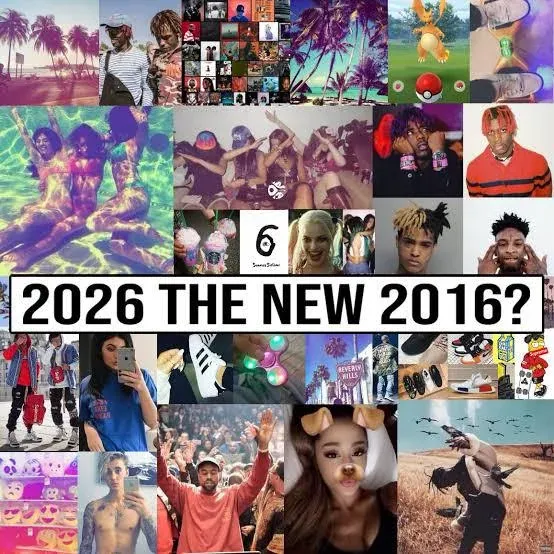
The “2026 is the new 2016” nostalgia wave is one of the clearest early‑year pop culture storylines, with social feeds full of people insisting this year “feels like” the mid‑2010s again. The vibe is less about exact dates and more about mood: a return to bright, slightly chaotic pop aesthetics, meme‑y humor, and a heavy dose of internet déjà vu, summed up in explainers like People’s breakdown of the viral trend.
On TikTok and Instagram, creators are leaning into 2016 nostalgia with edits that mimic old VSCO/Instagram filters, messy photodumps, and sped‑up tracks from the era. Short clips often pair mid‑2010s songs with captions like “POV: it’s 2016 and you just got home from school,” turning the era into a soft‑focus comfort fantasy for Gen Z who were teens or kids back then. At the same time, meme pages are resurfacing 2016 internet staples—early YouTube vlog aesthetics, Tumblr‑style quotes, and “starter pack” graphics—as if they’re new again, reinforcing the sense that culture is looping back on itself.
@abcnews It's only two weeks into 2026, but social media users are already feeling nostalgic and throwing it back to 2016 in a flurry of trending posts. The "2026 is the new 2016" trend has many, including celebrities like John Legend and Reese Witherspoon, sharing photos from 10 years ago on Instagram and TikTok and highlighting everything from Snapchat filters and hit songs to the top fashion trends at the time. #2016 #news #abcnews
♬ original sound - ABC News - ABC News
Celebrities are helping cement the trend by playing along publicly rather than just watching it from the sidelines. Hailey Bieber, Kendall Jenner, Justine Skye, and Charlie Puth have all been folded into the discourse through throwback clips and references to 2016‑era party photos, FOMO‑heavy Instagram aesthetics, and hits like “We Don’t Talk Anymore.” Commentators note that 2016 sits in a “recent but pre‑pandemic” sweet spot, which makes it especially attractive to people craving a more carefree internet era, and brands are already treating that nostalgia as a marketing lane by tapping mid‑2010s visuals, sounds, and references to make new content feel instantly familiar.