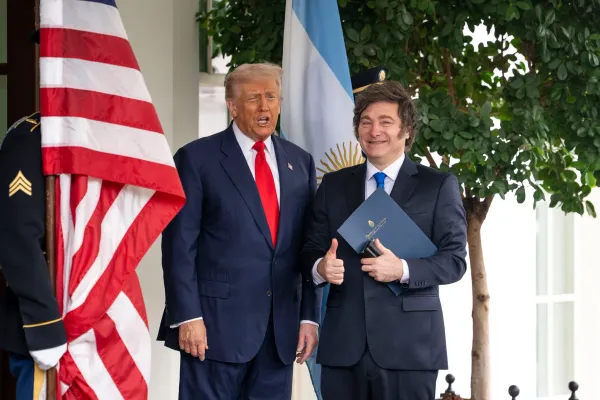
Argentina and the United States have signed a major trade agreement that cuts hundreds of tariffs in both directions and formalizes a closer political alliance. Under the deal, Argentina will remove trade barriers on more than 200 categories of U.S. goods, including chemicals, machinery and medical devices, while politically sensitive imports like vehicles, live cattle and dairy products will enter under government‑set quotas. In return, the U.S. will eliminate tariffs on 1,675 Argentine products and significantly increase the volume of Argentine beef allowed in at lower tariff rates, up to 100,000 tons a year.
The agreement builds on a framework the two countries announced in late 2025 and comes after Washington extended a multibillion‑dollar credit line to help stabilize Argentina’s economy. Supporters in both governments say the tariff cuts are meant to boost trade, increase export revenue for Argentina and give U.S. firms better access to a large South American market, especially in sectors like pharmaceuticals, industrial equipment and agriculture.
The deal also has a clear political dimension. It marks a major win for Argentina’s President Javier Milei, who has pushed to align his foreign policy more closely with President Donald Trump and to open Argentina’s long‑protected economy to more foreign competition. U.S. officials frame the agreement as part of a broader effort to deepen ties with like‑minded governments in the region and to secure access to “unavailable natural resources” and other strategic inputs.
Critics in both countries have raised concerns about the distribution of costs and benefits. Some Argentine industries that were shielded by high tariffs worry about competing with American manufacturers, while U.S. ranchers and certain lawmakers object to expanded quotas for Argentine beef and other farm products. Others note that steep U.S. tariffs on Argentine steel and aluminum remain in place for now, with only a promise to review them in the future. For a concise overview of the deal’s main provisions and political context, you can read NPR’s summary here.