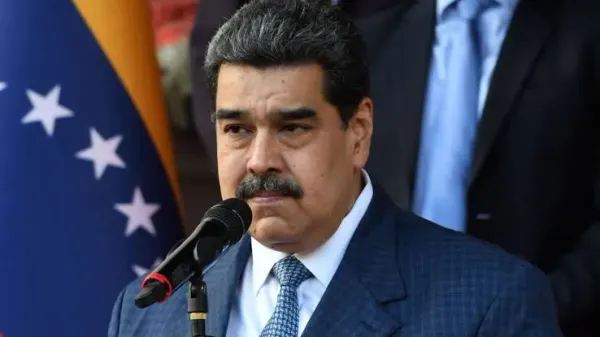
Venezuela’s ousted president Nicolás Maduro is in U.S. federal custody in New York, where he and his wife, Cilia Flores, face a superseding indictment in the Southern District of New York on narco‑terrorism, cocaine‑importation conspiracy, weapons and related charges.
Prosecutors allege that for years Maduro and senior Venezuelan officials worked with Colombian guerrilla groups and traffickers to move large quantities of cocaine from Venezuela toward the United States, using state resources and security forces to protect shipments and routes. Both Maduro and Flores have pleaded not guilty and are being held at the Metropolitan Detention Center in Brooklyn while the case proceeds.
At their January 5, 2026 arraignment in Manhattan federal court, Maduro and Flores appeared before U.S. District Judge Alvin Hellerstein, entered not‑guilty pleas to numerous drug‑trafficking‑related counts and did not contest their detention, while their lawyers highlighted injuries and health issues linked to the U.S. military operation that captured them.
The case is highly unusual in that it brings a former Venezuelan head of state and his spouse into a U.S. criminal court, prompting comparisons to the capture and prosecution of Panamanian leader Manuel Noriega and raising questions about how far U.S. courts can reach into the affairs of foreign regimes accused of narcoterrorism.
Analysts say the move raises questions about how Washington will handle relations with Caracas while its sitting head of state faces trial, and what it means for Venezuela’s fractured opposition and military elite, a dynamic that is sketched in the entry for United States v. Maduro et al..