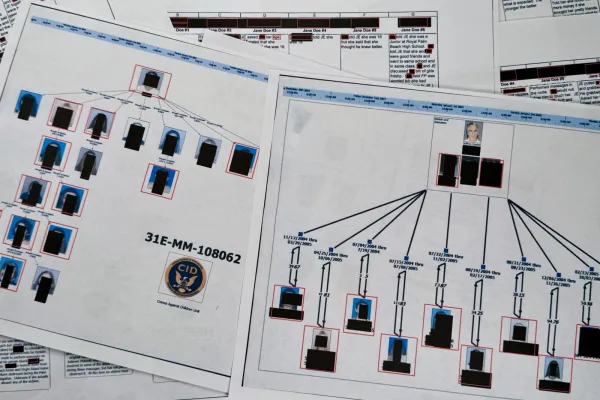
The U.S. Department of Justice has released roughly 3 million additional documents related to Jeffrey Epstein, fulfilling a congressional mandate to make more of the case file public. Officials say the new batch—part of a larger archive estimated at more than 800,000 records—includes emails, messages and jail records, with many names of women redacted for privacy.
Early reporting from outlets such as The Wall Street Journal says the files contain references to several high‑profile men, including business leaders and political figures, in emails and social photographs, a point outlined in the Journal’s explainer on the latest Epstein files.
Soon after the release, lawyers for survivors warned that redactions had failed in thousands of places, exposing names and personal information that were supposed to be protected. Attorneys told federal judges they had found FBI forms and emails where victims’ full names, bank details and addresses appeared unredacted, including minors at the time of the abuse.
In response, the Justice Department said it had taken down “several thousand documents and media” from the Epstein Files website so they could be checked and re‑redacted, while keeping the site itself online.
Deputy Attorney General Todd Blanche said the broader release is meant to close out a long document‑review process, but victims and some lawmakers argue that key materials remain heavily blacked out even after the corrections.
Advocacy groups have criticized the department both for re‑posting already public documents alongside new ones and for the initial redaction failures, saying that combination makes it harder to see what has been added without putting survivors at further risk. The files also contain internal records about Epstein’s detention, security and death in custody, which continue to prompt questions about how closely he was monitored before he died.
Legal analysts note that the documents do not, by themselves, establish crimes by people who appear in correspondence or photographs with Epstein. Instead, they say the material provides additional context about the network of contacts he maintained and the reach of his social and financial connections.
How much more the public learns from this batch may depend on how quickly journalists, lawyers and advocacy groups can separate genuinely new information from repeated or heavily redacted records, especially now that thousands of files have been removed and sent back for further review.