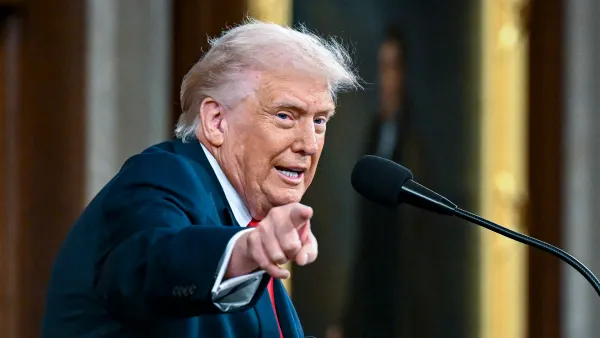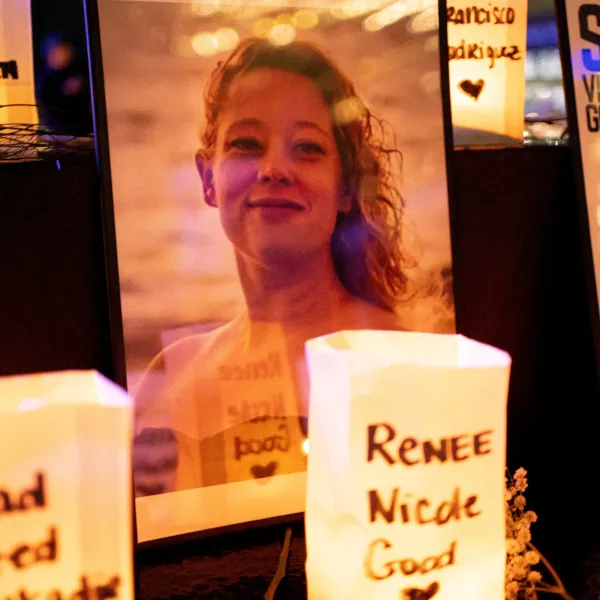
Congress is locked in a fight over how to respond after an ICE officer shot and killed Minnesota mother Renee Nicole Good during a traffic stop tied to a deportation operation outside Minneapolis, as detailed in “Congress debating possible consequences for ICE after Renee Good’s death.” Lawmakers are weighing options that range from a full investigation and tighter rules on immigration raids to potential cuts to ICE funding and even impeachment proceedings against Homeland Security Secretary Kristi Noem, who has strongly defended the officer and the administration’s stepped‑up immigration enforcement.
A recent press conference with Minneapolis Mayor Jacob Frey and other Minnesota officials, captured in the video “Minnesota leaders address fatal shooting of Renee Good by ICE,” underscores local demands for transparency and access to federal evidence in the case.
Good, a 37‑year‑old U.S. citizen and mother of three, was killed while behind the wheel of an SUV after dropping off her 6‑year‑old at school, an incident captured on video that has circulated widely and triggered protests in several cities. Federal officials say she and others obstructed officers, refused commands to get out of the vehicle and then drove in a way that put an ICE agent in danger, while her wife and other witnesses say the shooting was unnecessary and describe the family as armed only with whistles and protest signs. Local and state officials in Minnesota, including Governor Tim Walz, have questioned aspects of the federal account and are calling for an independent investigation into the use of force.
On Capitol Hill, Democrats describe Good’s death as a major flashpoint in the administration’s immigration strategy and are pushing bills that would add new limits on where and how ICE operates, require some DHS agents to be visibly identified and tie future funding to use‑of‑force and transparency reforms. Many Republicans, while expressing condolences, are emphasizing the dangers agents face and broadly backing ICE and the administration’s approach, arguing that the officer acted to protect lives and that sharply restricting the agency could undermine public safety.