
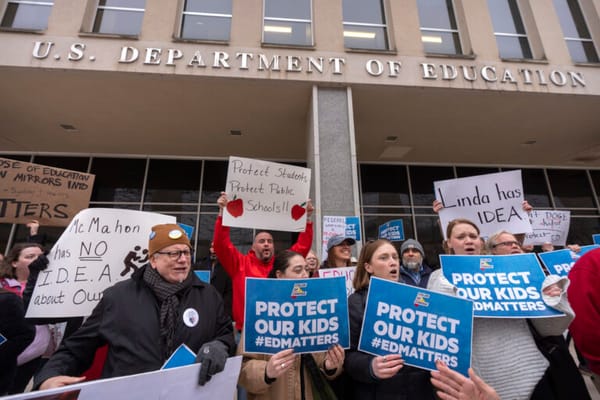
While Trump keeps talking about shrinking or even dismantling the U.S. Department of Education, lawmakers from both parties have quietly moved toward a funding deal that keeps the agency intact in K‑12 Dive’s latest week‑in‑review on federal education politics. The emerging agreement would fund the department at roughly 79 billion dollars for 2026, a slight bump over last year instead of the steep cuts or elimination Trump has floated on the stump. It’s a reminder that even with unified Republican control, Congress isn’t eager to blow up a department that touches everything from student loans to special‑education services.
At the same time, the administration has pulled back from enforcing a sweeping letter targeting diversity, equity, and inclusion initiatives in schools and universities, a document that had alarmed civil‑rights groups and higher‑ed leaders. Education Department officials have signaled that, for now, they will not investigate every DEI program as a potential civil‑rights violation, an apparent concession to legal and political blowback. The move suggests a gap between the most hard‑line rhetoric coming from Trump and the more cautious posture emerging inside the bureaucracy and on Capitol Hill.
For districts, the practical effect is a strange kind of limbo. Superintendents still hear Trump and his allies denouncing “woke schools” and calling for a federal crackdown, but the money and enforcement tools they rely on are, for the moment, being nudged rather than radically rewritten. That disconnect leaves educators trying to plan long‑term around a system that could shift sharply if Congress’ mood changes—or if Trump finds new levers that don’t require lawmakers’ sign‑off.