Forecasters say 2026 is on track to be the cheapest year for gasoline since the Covid era, with national averages expected to stay just under the 3‑dollar‑a‑gallon mark even after the shock of Venezuela. For drivers who remember the 5‑dollar peaks of 2022, when fuel was the face of the inflation crisis, pulling up to a pump that starts with a “2” feels like one of the only prices moving in the right direction.
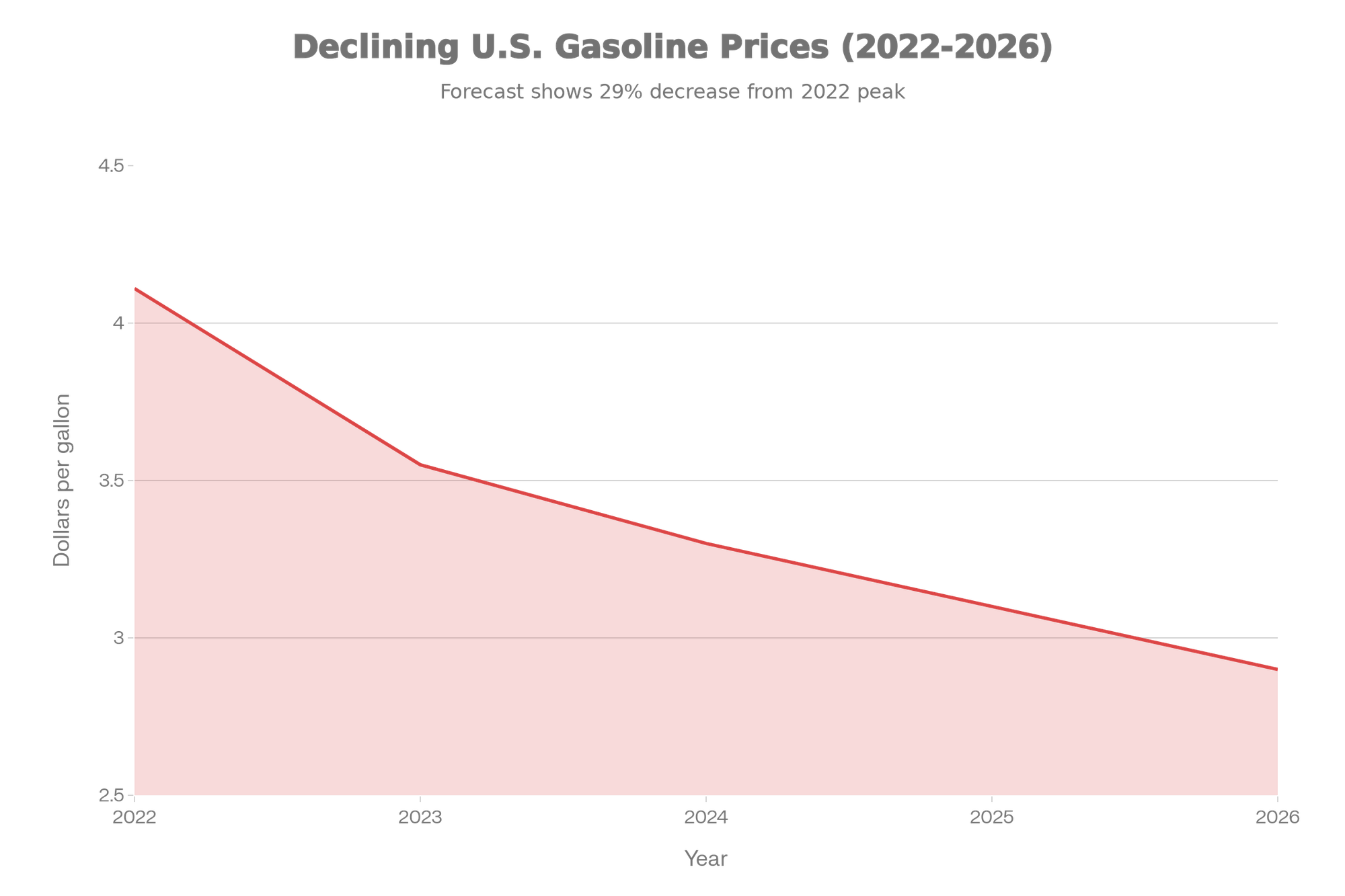
The U.S. Energy Information Administration now projects that average retail gasoline will fall to about 2.90 dollars a gallon in 2026, a further drop from roughly 3.30 in 2024 and a little over 3.10 in 2025. That relief won’t be evenly spread—West Coast drivers are still likely to pay more because of taxes and refining costs—but in much of the country the agency expects sub‑3‑dollar averages, with some Southern states flirting with the high‑2s all year.
For an individual household, the change is subtle rather than life‑changing: analysts estimate that lower prices at the pump translate into maybe a hundred dollars or so in annual savings for a typical driver, the kind of money that disappears into groceries, daycare or an extra streaming bill. Still, when everything else from rent to concert tickets seems stuck on an upward staircase, watching the gas total stall out a little lower each week is one of the few ways the cost‑of‑living story feels less abstract and more like something you can see on a screen.
A news piece from CNN, Despite Venezuela, forecasters say 2026 will be the cheapest year for gas since Covid, lays out the projections from GasBuddy and federal forecasters, including how far prices have fallen from the 2022 spike and which states are likely to see the biggest break.