At Super Bowl LX on Feb. 8, Bad Bunny used the NFL’s halftime stage to foreground Puerto Rican history, anchoring his performance in community memory rather than spectacle alone.
Among the most resonant moments was his tribute to Toñita, the longtime owner of a Brooklyn social club that has served as a cultural home for Puerto Rican New Yorkers for decades. Toñita would share in the moment alongside some of the most iconic figures in the culture’s history.
Toñita’s club, located in Brooklyn’s Little Caribbean neighborhood, has long functioned as a gathering space for music, conversation, and political organizing. For many in the Puerto Rican diaspora, it represents continuity amid displacement, gentrification, and cultural erasure. By centering that legacy during one of the most-watched broadcasts in the world, Bad Bunny reframed the halftime show as an act of recognition.
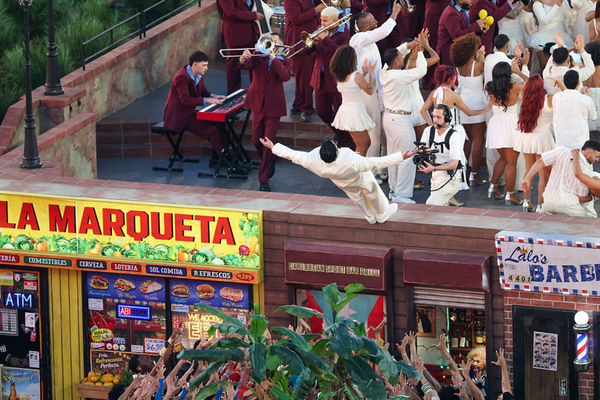
His set blended reggaeton, salsa, and hip-hop influences, drawing from Puerto Rico’s musical lineage while reflecting the lived experience of its diaspora. The production leaned into texture and symbolism rather than excess. Visual cues and staging referenced neighborhood spaces, everyday rituals, and the people who sustain culture outside commercial arenas. Toñita’s presence crystallized that intent.
The moment was brief but deliberate. Bad Bunny did not explain the reference. He did not narrate its meaning. Instead, he allowed the image to speak, trusting viewers familiar with New York’s Puerto Rican history to recognize its significance. For others, the tribute offered an invitation to learn.
In recent years, the Super Bowl halftime show has increasingly become a site for cultural storytelling. Bad Bunny’s performance extended that shift, asserting that Latin music’s global success remains rooted in local spaces and community labor. His homage to Toñita underscored the idea that cultural influence does not begin on stadium stages.
By elevating a neighborhood institution alongside his own superstardom, Bad Bunny redirected attention to the infrastructures of culture that often go unseen. The gesture linked Puerto Rico, Brooklyn, and the global stage, reminding viewers that identity is carried not only through sound, but through place, memory, and people who hold the doors open.