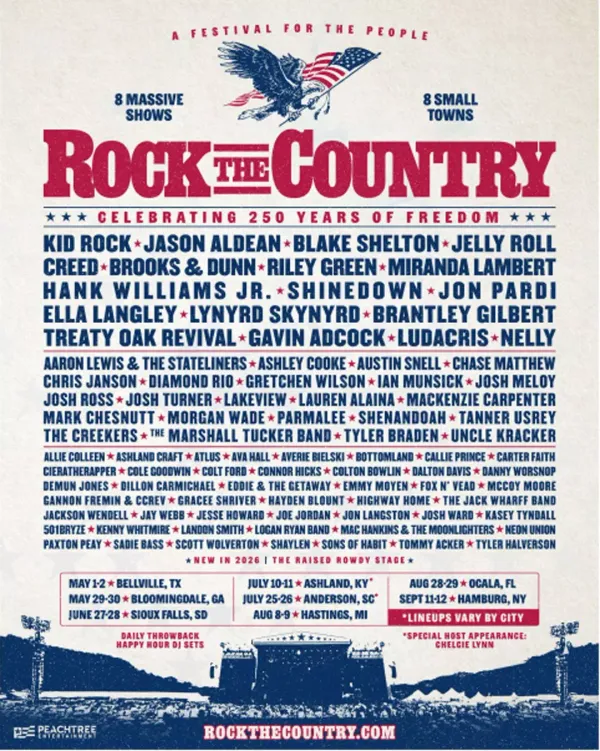
Country‑branded festival Rock the Country has lost at least three performers — Ludacris, Morgan Wade and Carter Faith — amid backlash over the event being labeled a pro‑Trump “MAGA fest.” The festival, promoted with headliners Kid Rock and Jason Aldean, quickly drew criticism from fans who questioned the mix of artists on the bill.
Many asked why a 2000s crossover rapper like Ludacris and more left‑leaning or indie‑country performers were appearing alongside outspoken conservative acts. Parade’s report on three performers dropping out of Rock the Country notes that the festival’s site was updated to remove Ludacris and Wade from lineups in several cities shortly after the controversy grew.
Ludacris’ team told outlets including Rolling Stone that his inclusion was a “mix‑up” and that he was never actually meant to perform. Morgan Wade has not publicly detailed her reasoning, but her name has disappeared from updated posters, and reports list both her and Carter Faith among the artists who have exited the tour. Carter Faith’s name has lingered on some promotional materials even as she’s confirmed she is no longer playing.
Reactions online have split along familiar lines. Some fans argue artists should be free to play any crowd, while others say politically branded lineups inevitably shape who feels welcome to attend and how performers are perceived. Comment sections and fan forums have turned Rock the Country into another flashpoint over how closely music, politics and personal branding are now linked.
@tmz 👀🎤LUDACRIS DROPS OUT OF THE ‘ROCK THE COUNTRY’ TOUR. His rep confirms the rapper dropped from the festival after fans erupted online...
♬ original sound - TMZ
Industry watchers say the episode highlights how careful festivals now need to be about branding and how clearly they communicate expectations to artists. With 2026’s touring and festival calendar already packed, artists have more options and may be quicker to walk away from shows that could complicate their public image.
How Rock the Country proceeds — with or without replacement acts — will serve as an early test of whether explicitly ideological branding helps or hurts large‑scale music events this year.